
Action marked done
The problem remains.
Information gets scattered. Records conflict. Systems overload good people. Everyone can see one part while nobody sees the whole. ORVIA exists to make that picture clearer — and help fix what can be fixed.
Observation · Reflection · Visibility · Insight · Accountability
The problem remains.
A person's words can change as they move through a system.
Important evidence can sit in different places.
Processes can stop people doing good work.
ORVIA was built for that gap.
We want to understand what happened, what matters, what is missing, what can be fixed — and whether the fix actually worked.
Go beyond the paperwork and understand the real operational picture.
Turn evidence into practical, proportionate next steps with clear ownership.
Do not confuse closing an action with solving the problem.
Person speaks → meaning preserved → relevant information connected → authorised people informed → actions owned → outcome checked.
Technology should carry the administration. Humans should carry the care.These are not separate services. They are how ORVIA approaches everything.
See what is actually there — not only what a system says should be there.
Pause before concluding. Challenge the first explanation.
Bring together what is fragmented, hidden or difficult to understand.
Turn information into something people can actually use.
Turn understanding into action, then check whether the action worked.

ORVIA grew from operational leadership, military service, security, emergency response, business, health and social care, safeguarding and regulated services.
A system can look sound from the outside while the people inside it experience something very different. That is why ORVIA starts with reality — not assumptions, not dashboards, and not what somebody hopes is happening.
Read the founder story →Evidence sometimes supports a concern. Sometimes it does not. Sometimes another explanation is stronger. Sometimes there is not enough evidence to know.
We say so.
We say that too.
We show it.
We say that plainly.
People deserve the most honest answer we can give them — even when that answer is uncomfortable.
Safeguarding has been reformed again and again after serious harm, yet national reviews continue to identify familiar weaknesses: information is fragmented, thresholds are misunderstood, ownership blurs and opportunities to act can be missed. Risk rarely sits neatly in one place — it moves between home, school, health, police, care, housing, digital life and family networks.
That does not mean professionals do not care. It means good people can be working inside systems that make it harder to see the whole picture.That figure is not a verdict on individual practitioners. It is evidence that safeguarding failure remains a real, current system problem — and why learning has to move beyond simply adding another process after something goes wrong.
The Child Safeguarding Practice Review Panel has repeatedly identified problems with role clarity, referral criteria, service thresholds, information sharing, joint planning and coordinated decision-making. Its 2023–24 annual report described missed opportunities where information was not shared or triangulated across agencies and where key partners were absent from multi-agency work.
Read the national safeguarding evidence →The Children's Wellbeing and Schools Act 2026 requires safeguarding partners to establish multi-agency child protection teams. The wider Families First reform programme is backed by £2.4 billion across the 2026–27 to 2028–29 settlement and is designed to shift more support towards prevention, earlier help and stronger multi-agency working.
See the 2026 reform programme →The Crime and Policing Act 2026 introduces a statutory duty for adults engaged in relevant activities in England to report suspected child sexual offences to police or a local authority, subject to the Act's exceptions. It is another move towards clearer safeguarding duties and accountability.
Read the statutory changes →In February 2026 the Prime Minister announced further child online-safety measures, including action to bring more AI chatbots within illegal-content duties and powers intended to let government respond faster to emerging online harms. The government also said it would consult on measures to help prevent children sending or receiving nude images. Safeguarding is no longer confined to a building, a service or a paper file.
Read the Prime Minister's announcement →In 2026, the Child Safeguarding Practice Review Panel published a national review following the death of baby Victoria Marten. The Panel said the circumstances of her death were rare, but the professional challenges and systemic safeguarding issues involved were much more common.
The government response later committed to implement all eight national recommendations across adult and children's social care, health, policing, justice, housing and wider public services.
The lesson is not “blame one professional”. It is that safeguarding can fail in the gaps between people, services, information and responsibility.Read the official national review →ORVIA looks at the human reality behind the process: what was known, what was recorded, what changed meaning, what was not connected, who owned the next step and whether the action actually improved the person's life. The aim is not another layer of bureaucracy. It is a clearer picture and a fix that can be checked.
We look at what people do. We also ask: what is the system doing to them?Childline changed safeguarding by giving children somewhere to speak when the systems around them had not made that easy. Our reflection looks at what Esther Rantzen's legacy still teaches us about listening, preserving meaning and making sure the human being does not disappear inside the process.
AI can organise, compare, challenge, retrieve and prepare. It does not own consequential decisions.
ORVIA does not hand safeguarding, clinical, legal, regulatory or culpability decisions to software.
See the ORVIA method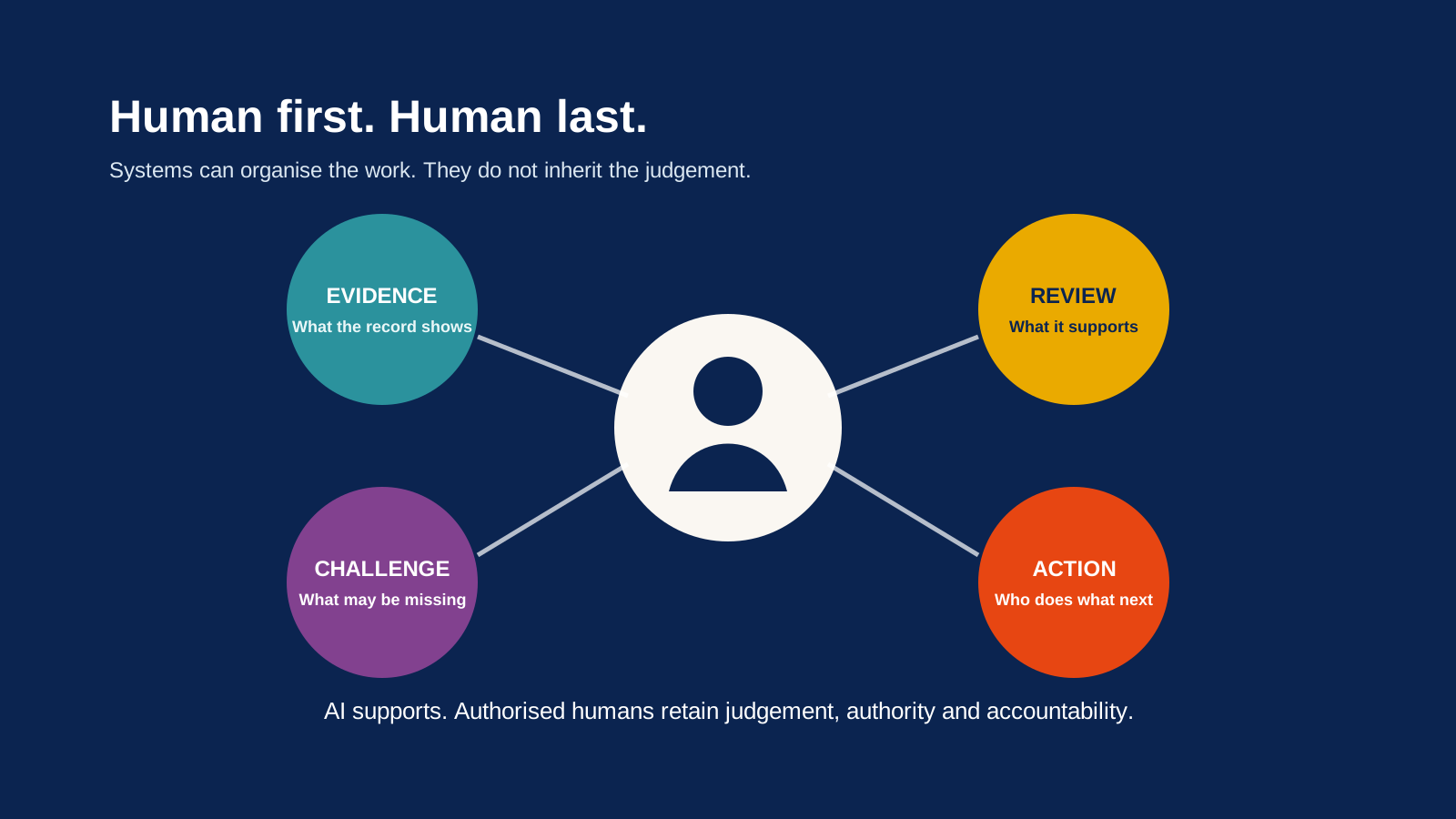
Different doors. Same philosophy: see clearly, understand properly, act carefully and verify honestly.